European Union
The EU is both a political project and a form of legal supranational organisation.
The political project reflects the will of the EU Member States to create an ever closer union among the peoples of Europe, in which decisions are taken as openly as possible and as closely as possible to the citizen (Article 1 of the Treaty on European Union).
To achieve this, the EU has a number of objectives:
- to promote peace, its values and the well-being of its peoples;
- to offer people living in the EU an area of freedom, security and justice without borders;
- to establish an internal market which ensures sustainable development based on balanced economic growth and price stability, a highly competitive social market economy aiming at full employment, social progress, protecting the environment and promoting scientific advancement;
- to combat social exclusion and discrimination and to promote equality between women and men, solidarity between generations and the rights of the child;
- to ensure economic, social and territorial cohesion between Member States;
- to respect the cultural and linguistic diversity of Member States and to protect European cultural heritage;
- to establish economic and monetary union, with the euro as its currency;
- to act in accordance with its values and international law in its relations with the wider world to ensure peace, security, sustainable development, the development of people and the protection of human rights.
The EU is founded on the common values of its Member States, which include respect for human dignity, freedom, democracy, equality, the rule of law and respect for human rights, including the rights of persons belonging to minorities.The declaration by Member States on the symbols of the EU defines the symbols which express the sense of community of the people in the EU and their allegiance to it:
- the flag (twelve stars on a blue background)
- the anthem (Ludwig van Beethoven’s ‘Ode to Joy’)
- the motto (‘United in diversity’)
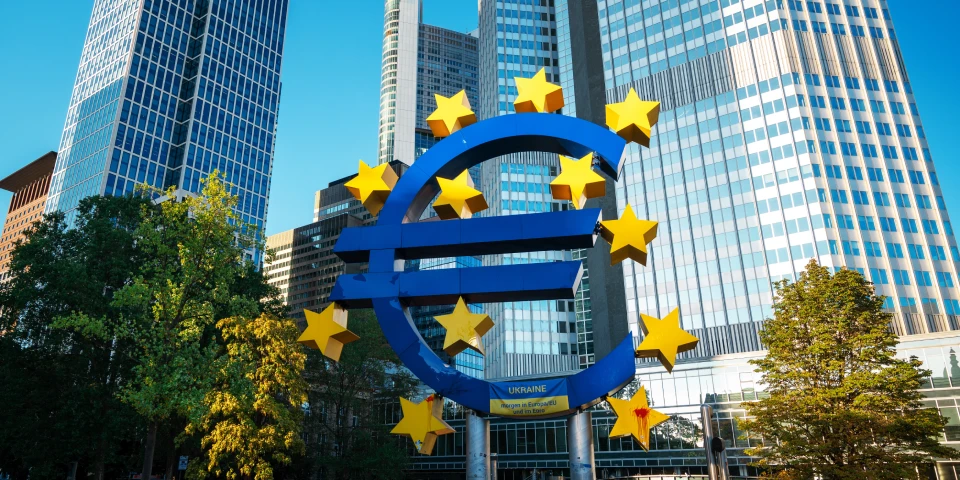
- the currency (the euro) and
- Europe Day (9 May).
The EU is a form of legal organisation founded mainly on the Treaty on European Union and the Treaty on the Functioning of the EU. Member States confer powers on the EU to attain objectives that they have in common. The ‘EU method’ (also known as the ‘Community method’) applies to most of the policies coming under the EU’s responsibility, with the exception of:
- police and judicial cooperation on criminal matters, where Member States have a right of initiative and a right of appeal to the European Council on legislative matters;
- the common foreign and security policy, where the intergovernmental method prevails.
It has a single institutional framework (consisting of the European Parliament, the European Council, the Council of the European Union, the European Commission, the Court of Justice of the European Union, the European Central Bank and the Court of Auditors). Furthermore, the Treaty of Lisbon confers legal personality on the EU.
The European Coal and Steel Community was founded in 1952. Together with the European Economic Community and the European Atomic Energy Community (Euratom) of 1958, it evolved through a long history of successive Treaty reforms into the European Union (EU) in 1992.
Council of the European Union
The Council of the European Union (‘Council’) is one of the EU’s main decision-making institutions. Its meetings are attended by ministers from the 27 EU Member States. It has policymaking and coordinating functions.
The Council’s seat is in Brussels, but, in accordance with the Protocol No 6 to the Treaties and its Rules of Procedure, its meetings are held in Luxembourg in April, in June and in October. Sessions of the Council (except for the Foreign Affairs Council) are convened and chaired by the six-monthly presidency.
The Council meets in 10 configurations, bringing together the relevant ministers from the Member States:
- General Affairs;
- Foreign Affairs;
- Economic and Financial Affairs;
- Justice and Home Affairs;
- Employment, Social Policy, Health and Consumer Affairs;
- Competitiveness (Internal Market, Industry, Research and Space);
- Transport, Telecommunications and Energy;
- Agriculture and Fisheries;
- Environment;
- Education, Youth, Culture and Sport.
The ‘General Affairs’ Council prepares and follows up the meetings of the European Council, together with the President of the European Council and the Commission (Article 16(6) first subparagraph of the Treaty on European Union). It is responsible for the overall coordination of policies, institutional and administrative questions and areas affecting more than one EU policy, such as the multiannual financial framework and enlargement. It also ensures consistency and continuity in the work of the different Council configurations.
The work of the Council is prepared by the Committee of Permanent Representatives of the Member States (Coreper). To help in preparing the Council’s work, Coreper may set up working parties or committees.
Coreper is divided into 2 parts:
- Coreper II, composed of the permanent representatives of the governments of the Member States, deals with items relating to the General Affairs, Foreign Affairs, Economic and Financial Affairs and Justice and Home Affairs configurations of the Council;
- Coreper I, composed of the deputy permanent representatives, prepares all other Council configurations.
The Council, together with the European Parliament, carries out legislative and budgetary functions. It is also the lead institution for decision-making on the common foreign and security policy (CFSP). Member States coordinate their economic policies within the Council.
In most cases, the Council’s decisions, based on proposals from the Commission, are taken jointly with the European Parliament under the ordinary legislative procedure. Depending on the subject, the Council takes decisions by simple majority, qualified majority or unanimity. The qualified majority is the voting rule by default.
According to the Treaties, some decisions are adopted not by the Council but by common agreement of the governments of the Member States, for instance the appointments of the Judges and Advocates-General to the Court of Justice of the European Union, or the setting of the seats of the institutions and agencies. Those decisions are generally adopted on the sidelines of the Council or Coreper meetings. They are not EU acts and therefore cannot be challenged before the Court of Justice of the European Union.



