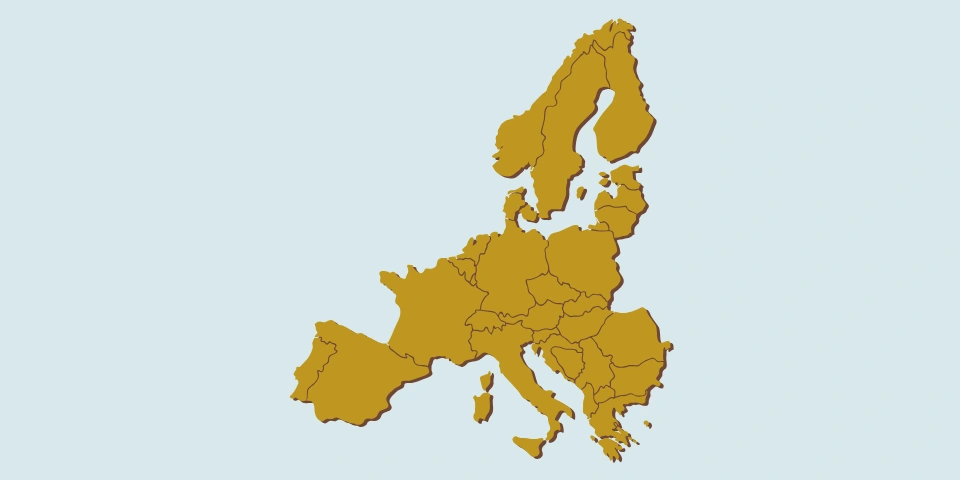
EU Member States
Each of the 27 Member States is bound by the Treaties and the acquis communautaire. Each participates in governing the EU on equal terms.
There were 28 Member States until , when the United Kingdom withdrew from the EU and became a third country (non-EU country).
Now there are 27 Member States: Belgium, Bulgaria, Czechia, Denmark, Germany, Estonia, Ireland, Greece, Spain, France, Croatia, Italy, Cyprus, Latvia, Lithuania, Luxembourg, Hungary, Malta, the Netherlands, Austria, Poland, Portugal, Romania, Slovenia, Slovakia, Finland and Sweden.
In the summaries of EU legislation, the term ‘EU countries’ is used often as alternative of ‘Member States’.
A candidate country that meets the accession criteria as defined by the Copenhagen European Council of 1993 and signs the accession Treaty with the individual EU Member States becomes a Member State of the European Union.
EU enlargement policy
EU enlargement policy deals with countries that currently want to become members of the EU. It aims at extending the EU’s zone of peace, stability and prosperity, and providing political, economic and social benefits for these countries and the EU alike. Article 49 of the Treaty on European Union is the basis for the enlargement process.
Following the six founding members – Belgium, Germany, France, Italy, Luxembourg and the Netherlands – a further 22 countries have joined the EU:
- 1973: Denmark, Ireland and the United Kingdom (1);
- 1981: Greece;
- 1986: Spain and Portugal;
- 1995: Austria, Finland and Sweden;
- 2004: Czechia, Estonia, Cyprus, Latvia, Lithuania, Hungary, Malta, Poland, Slovenia and Slovakia;
- 2007: Bulgaria and Romania;
- 2013: Croatia.
Albania, Bosnia and Herzegovina, Georgia, Moldova, Montenegro, North Macedonia, Serbia, Türkiye and Ukraine have the status of candidate countries.
Accession negotiations with Iceland started in July 2010 and were then put on hold by the Icelandic government in May 2013. In March 2015, Iceland requested that it no longer be considered a candidate country for EU membership. Iceland will hold a referendum on to decide whether to resume EU accession negotiations.
Kosovo* is a potential candidate.



