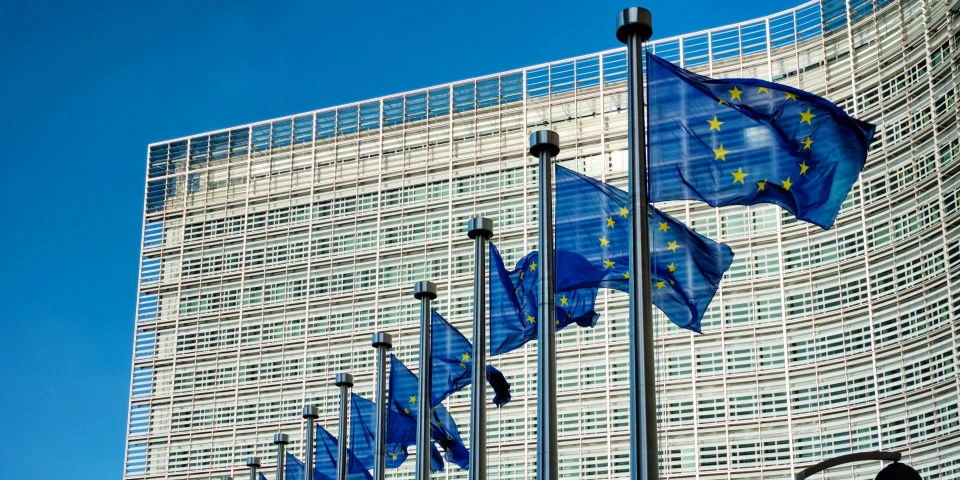
The Council of the European Union (‘Council’) is one of the EU’s main institutions. Its meetings are attended by ministers from the 27 EU Member States.
European Union institutions
The Council of the EU's main task is EU law-making. The Council, in most cases along with the European Parliament, negotiates and adopts EU laws based on proposals from the European Commission. That's why the Council is also referred to as an EU 'co‑legislator'.
The role of the Council: five main tasks
- Negotiating and adopting EU legislation
- Adopting the EU budget
- Coordinating member states' policies
- Developing the EU's common foreign and security policy
- Concluding international agreements on behalf of the EU
The presidency of the Council of the EU
The Council’s seat is in Brussels, but, in accordance with the Protocol No 6 to the Treaties and its Rules of Procedure, its meetings are held in Luxembourg in April, in June and in October. Sessions of the Council (except for the Foreign Affairs Council) are convened and chaired by the six-monthly presidency.
EU member states take turns holding the presidency of the Council of the European Union for six months. The presidency's role is to chair most meetings of the Council, set its work programme and agendas, and act as the representative of the Council.
- What the presidency does
- Who currently holds the presidency of the Council?
- A rotating presidency
- Trio of presidencies
What the presidency does
The presidency of the Council is responsible for driving forward the Council's work on EU legislation, maintaining the continuity of the EU agenda, and ensuring orderly legislative processes and cooperation among member states.
Its role is vital for the stability of the EU and for the performance of its legislative functions.
The Council meets in 10 configurations, bringing together the relevant ministers from the Member States:
- General Affairs;
- Foreign Affairs;
- Economic and Financial Affairs;
- Justice and Home Affairs;
- Employment, Social Policy, Health and Consumer Affairs;
- Competitiveness (Internal Market, Industry, Research and Space);
- Transport, Telecommunications and Energy;
- Agriculture and Fisheries;
- Environment;
- Education, Youth, Culture and Sport.
The ‘General Affairs’ Council prepares and follows up the meetings of the European Council, together with the President of the European Council and the Commission (Article 16(6) first subparagraph of the Treaty on European Union). It is responsible for the overall coordination of policies, institutional and administrative questions and areas affecting more than one EU policy, such as the multiannual financial framework and enlargement. It also ensures consistency and continuity in the work of the different Council configurations.
Coreper
The work of the Council is prepared by the Committee of Permanent Representatives of the Member States (Coreper). To help in preparing the Council’s work, Coreper may set up working parties or committees.
Coreper is divided into 2 parts:
- Coreper II, composed of the permanent representatives of the governments of the Member States, deals with items relating to the General Affairs, Foreign Affairs, Economic and Financial Affairs and Justice and Home Affairs configurations of the Council;
- Coreper I, composed of the deputy permanent representatives, prepares all other Council configurations.
The Council, together with the European Parliament, carries out legislative and budgetary functions. It is also the lead institution for decision-making on the common foreign and security policy (CFSP). Member States coordinate their economic policies within the Council.
In most cases, the Council’s decisions, based on proposals from the Commission, are taken jointly with the European Parliament under the ordinary legislative procedure. Depending on the subject, the Council takes decisions by simple majority, qualified majority or unanimity. The qualified majority is the voting rule by default.
According to the Treaties, some decisions are adopted not by the Council but by common agreement of the governments of the Member States, for instance the appointments of the Judges and Advocates-General to the Court of Justice of the European Union, or the setting of the seats of the institutions and agencies. Those decisions are generally adopted on the sidelines of the Council or Coreper meetings. They are not EU acts and therefore cannot be challenged before the Court of Justice of the European Union.



